My brother-in-law has a new small business and is doing great with building his business. He makes some delicious hot sauce. They (his wife, too) have been great at engaging with their customers through social media. This is their channel to their customers. Using Brian Honigman’s LinkedIn learning course “Social Media Marketing Foundations” I’m helping them be more effective and efficient. The goal is that the work and effort that they put in is focused on obtaining the results they want for their business.
First, they have been active on several platforms and have been manually updating all their posts. They also have a general idea of what they are going to post for the week. But they don’t have a fixed plan, and they adjust as the day arrives or find inspiration.
Small business social media can be overwhelming and take over your time. To get the most out of social media marketing, we need a plan or strategy, communicate effectively, and measure the results. The most effective social media marketing has a balance of entertainment education and promotion. A pure promotion strategy will become tiring even to your most loyal customers.
Creating a Social Media Strategy

All good marketing strategies describe the goals, audience, and how to reach the customer. The idea is that you would be able to provide the “right message, in the right place, at the right time.” (Honigman, 2020, shifting to passive and private 1:00).
Goals: Define the most important and impactful goals for your company. An increase in sales is a good one but also consider long-term goals like branding. For Dino’s Hot Sauce, we are focusing on three goals, the number of followers, engaged customers (comments or likes), and speed of sales (he sells out every batch).
Audience: Knowing your customer helps inform what would be the most valuable to them. To define your customer’s marketers, use a strategy called Personas. This is a generalization of your customers but writing in detail of a single person. I describe this below in the “Define Your Audience” section. One of Dino’s personas is Sam (32). We will learn about the Sam persona below.
Activities: Defining the activities (and what platforms they are on) keeps the content at the highest level and focused on the goal. This will help take your posts from the last-minute sharing of a single photo with rushed marketing copy (writing). With Dino’s, the focus will be a combination of short videos, photos, and cooking (BBQ mostly) tips.
Measurements: I cover marketing ROI’s (return on investment) extensively here. But the common measurement, according to Honigman (2020):
- Improve customer engagement
- Generate leads (part of the sales funnel)
- Sales
- Increase traffic, live or digital platform
- Expanded reach (shares and likes)
- Enhanced Brand Perception (recognizable brand)
The idea would be to have a combination of targets that fall into these two categories:
- Ongoing think Long Term beyond one campaign.
- Campaign level goals: Short term and focused.
Define your Audience

Building personas is the practice of defining your customers. The challenge is to capture Their interests, challenges, demographics, and motivations so that you can personalize your marketing message to them.
Personas are NOT A REAL person, but the ideal customer based on your experience and research. The Sam persona is a fictitious customer that fits the customer Dino’s sees as their customer. Building personas is an art and will require some adjustments as you refine your company and who you reach as an audience.
To start, use your own experience.
What do you know about the customers you already have?
- If you see your customers face to face, what do you observe?
- What do they talk about?
- Family?
- Then use your website info. Google Analytics and Facebook Pixels can give you incredible insights into your customers.
Ask for more. Survey your customers if you don’t know. These can be emails looking for focus groups or an automated survey as part of checkout.
Take this info and divide it up into organized groups. For example, Sam was identified because Dion’s had almost all his customers on social media identified as fans of a major sport team in their descriptions. Further discovery is that this group also often talks about chicken wings. When doing a deeper dive, a subset of customers identified as foodies in his survey.
Once the persona has been identified, it needs to be written down in an easily referenced way. Charts or infographics are great. Visme.co has a simple infographic (below) that is free to use.
Things to consider to add to your personas:
- Demographics
- Age, profession, education, family life
- Personality traits
- Preferences
- Behaviours
- Goals
- Pain Points
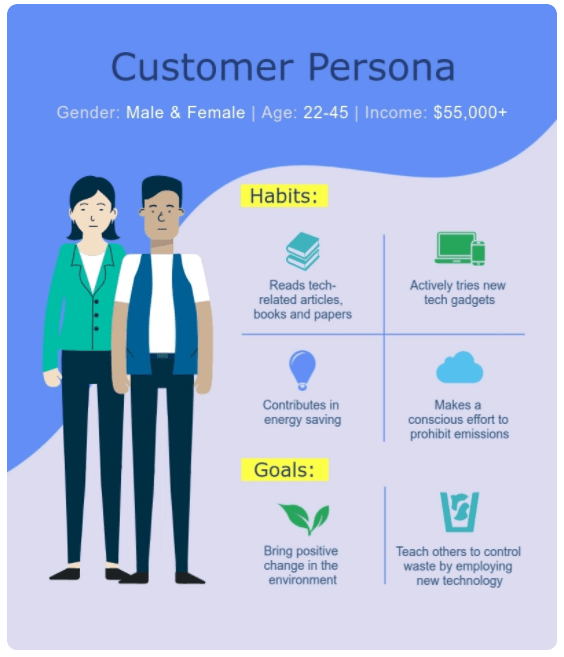
Sam: 30-35, mid-level professional, parent (Gender neutral)
- Personality traits – Sports fan, and entertainers, considered as a foodie by their friends
- Preferences – always hosts looks to impress and feels great when a local company is found
- Behaviours – Uses Facebook for staying connected with friends but uses Instagram to find new recipes and cooking hacks or tools.
- Goals – impress friends and family while having fun
- Pain points – Too much salt or heat. From the store, bought sauce, not cool enough to by box brands
Once The persona(s) have been defined, you will have a better idea of the channels (type of social media) to choose from. The research should indicate where these customers are active. Combining this info with your marketing intended activities will narrow down the platform(s) to use to reach this persona. Sam is active on Facebook and Instagram. Both are good platforms to share videos and stories about cooking tips or hacks. These also align with the goal to increase engagement and the number of followers.
Don’t be active on all platforms. Being active and engaged to drive results requires energy and time, and not all platforms will provide the return for the effort.

Honigman (2020) provides a quick overview of each possible platform:
Facebook– largest and with the most diverse uses.
- Content can be Text, Video, Images, Live video
- Embedded marketing tools
- Wide demographic
Instagram– Owned by Facebook, Image-based
- Short or long videos, Images
- Users use to find inspiration and new product ideas
Twitter– Current events and news
- Communicate with customers directly
- Text-based with limited characters
- Can add links and images or gifs
LinkedIn– Professional networking
- Connections for business to business
- Show your expertise, work cultures, and recruitment.
YouTube– Video sharing
- Business and influencers create pages
- Can be monetized
Users are becoming more engaged in Chat and Messenger sites. These provide a unique way to connect with your audience. Users are highly active when using these platforms. Below are Honigman’s (2020) ideas for business use.
Facebook Messenger and Whatsapp
- Highlights ads in the inbox
- Alternative to newsletters or email
- Customer Service Line
- Either chatbots or live
- Used often to book appointments
Snapchat– Ad through the content (between stories)
- Sponsored filters
- Not appropriate for customer service because the videos expire.

Honigman’s (2020) also explains the unique channels that would provide diversification and cater to your specific customers. He says that these areas usually have high engagement but a lower overall audience. Diversifying in these can give balance to your specific marketing strategy.
- Ticktok: Younger demographic, short videos. Primarily on challenges or humour.
- Yelp: Local review and internet directory
- Pinterest: Inspirational visuals.
- Quora: Question and Answer forum
- Tumblr & Medium: Social network meets blogging
- Reddit: New aggregator with specific groups and ads throughout.
- Gify: search engine for Gif’s
To discover more on each of these platforms Honigman’s (2020) makes several suggestions: Researching the platform’s own info. Using 3rd party marketing data like Emarketer, or Pew Research to see trends with consumers and businesses. Focus on what will achieve your marketing goal. For Dino’s at focusing on Facebook and Instagram
With Dino’s, Pinterest is a platform that we are going to test out. Specifically to share dinner ideas for sports parties.
Publish on Social Media
Once the platforms have been selected, we need to develop a plan for 3-5 consistent features: feature recipes, inspirational hosting ideas, production schedule. By providing the production schedule, we hope this will create a group of people who will plan ahead to order when available.
The Goals for good content:
- Engaging – no promotional focused on entertaining, educating, or value-driven
- Relevant – Does the audience have a reason to care?
- Complementary – should be connected clearly to what you offer as a business and align with your brand.
To make your social media more efficient, you need an editorial calendar. A social media aggregator is required too. Dino’s uses Hootsuite to plan two weeks of content at one time.
Starting with the editorial calendar. For a small business, it can be an excel spreadsheet that tracks goals, actions for each, schedule of the posts, and copy as they are created (ahead of time). This would also take into consideration holidays or relevant days to recognize. This would be like the Super Bowl or the pepper-head festival.
Using a social media aggregator like Hootsuite will change your time management. There is a free version that will allow 3 accounts to be scheduled 1 month in advance. To be able to pre-schedule your marketing plan for the month will free your time to engage with your customers or ad value to your customers.
There is a difference between Paid and Organic advertisements, including the range from the reach of customers you might not already be connected to. It also includes the ability to A/B test; this is covered in my blog on 10 advance Facebook Marketing tips.
Interact with Customers

Communication with the customer is a significant benefit of being on social media. You can get great insights from your customers about what they like about your product or service. You also can serve your customers with a custom message that appeals to them directly. Of course, some continue to blast their customers with the same marketing promo over and over. This can lead to advertising fatigue. Think of the customer that saw the same type of ad for the hot sauce they just bought. How many times do they need to see it until they will order another bottle? I don’t know, but too much traditional promoting will drive people away from your social media. They will unfollow, and all the work you put in to build your customer following is undone.
Honigman (2020) suggests thinking of it as building a community. Why are people opting in to stay? What would drive them away (don’t do that)? And how can you demonstrate that you care?
Be active in the conversation, even if it’s tough. This is the reason to be actively seeking customer feedback. Honigman (2020) cites Ad Week with his comment 43% net promoter score drops with comments left unanswered. Customer complaints or issues are challenging to handle but especially in a public setting. The angry customer on Facebook is like a customer yelling in the store.
43% net promoter score drops with comments left unanswered.
Honigman (2020) citing Ad Week
To deal with this, start with the early work. Prevent issues by addressing concerns that other customers have had. If it is a defective product, fix it. If it is a part that wears out, be open and clear about it BEFORE it’s brought up.
The next step is to deal with issues immediately as they come up. For example, if a customer is complaining on Facebook, reply as quickly as possible. This shows several things, but mostly, it shows others that you care to respond and that they too would get attention if they needed it.
When addressing customer issues online, follow these general steps:
- Address the post and express concern and empathy
- Ask to move (direct) the conversation to a private chat
- Keep it on the same network
- Set an expectation for replies and resolution
These comments will happen regardless if you are on the platform or not. This is why you should have alerts set up to monitor the web for mentions of your company or product name. Keyhole.co and Google alerts can help with that.
Selling on Social Media
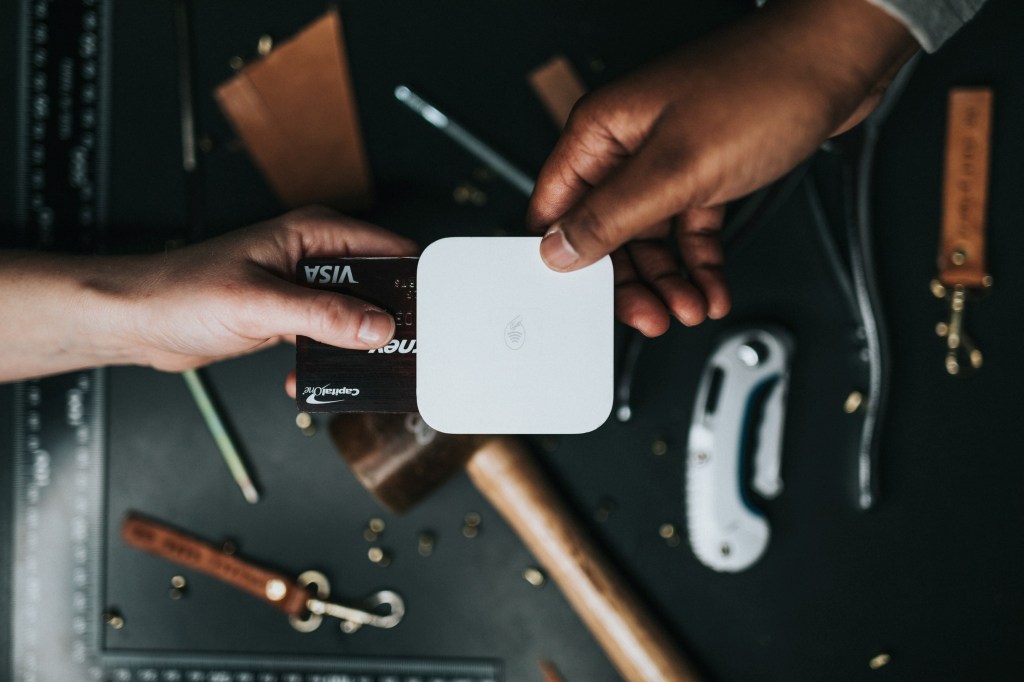
There are two ways of achieving sales with social media, either directly or indirectly. This means that people purchase as a direct result of a social media post or because it was part of the customer journey.
Direct sales include posts that ask for purchases. I see them as preorder posts. Discount posts. Information posts with buy here link. Where indirect would be sharing taco recipes and sharing local food festivals. It could also include coming soon posts and reviews. There is a balance with many of your posts needing to be indirect. The self-promoting posts should not be greater than one every three posts.
People are trusted over brands, so engaging influencers is a great way to increase your brand’s reach. This can be done by either paying for a sponsored post, providing free products to try/test, co-branding products and sharing the profit. Dino’s is currently talking with local restaurants to feature his sauce.
Measuring Social Media Activity
If you measure it you can change it. A detail of return on investment is part of my “Return on Marketing Investment for Small Business.” Still, the basics would be to measure the campaign level. For example, how much engagement did the post about the Edmonton Downtown Food festival get? This would be measured by the post or campaign. Whereas an ongoing advertisement would be focused on long-term goals like the number of followers. Establish goals, track results, analyze, compare, and adjust.
Innovating on Social Media
Honigman (2020) explains that social media use is shifting to being more passive and private. It is becoming less relevant just to self-promote or to sporadically share content. Consumers need “the right message, in the right place, at the right time” (Honigman, 2020, Shifting to Passive & Private 1:00). Content needs to be valuable to customers, and a well-thought-out series of advertisements can engage your audience. This strategy would be better than one-off and individual posts.
The other trend is to reach into the private groups and reach a smaller, more concentrated audience. This can be accomplished by creating your own support pages or groups.
Pro-Tip
Once you have mastered creating a social media plan, defining your customers, publishing, interacting with customers, and measuring, you should experiment. Not for the sake of it but to develop new strategies and markets that might yet be discovered. Try changing one thing and seeing how it performs. But keep with the basic principles of the social media strategy: define a goal, establish timelines, monitor the progress, and document the results.
Conclusion.
Remember that the strategy’s goal is to reach the right people at the right time in the right place with the right message. No problem, right? Wrong! Like Dino’s Hot Sauce starting with a strategy will help focus your energy and allow any small business to create a social media marketing strategy. Increasing the value to your customers while focusing your efforts in the best place.
To stay up-to-date on the latest trends, Hongiman (2020) suggests:
You can also take Hongimans course on social media for leaders.
Readability: Grade 7
Keywords: Small business social media, Small business social media marketing
References
Honigaman, B. (2020). Social Media Marketing Foundations. LinkedIn Learning. https://www.linkedin.com/learning/social-media-marketing-foundations-2020/encouraging-direct-and-assisted-sales
Visme. (2021). Customer persona – infographic template. https://www.visme.co/templates/infographics/customer-persona-1425281617/
[Photo of SOCIAL MEDIA] Photo by Merakist on Unsplash
[Photo of paper and pens] Photo by Felipe Furtado on Unsplash
[Photo of Audience] Photo by Edwin Andrade on Unsplash
[Photo of vending machines] Photo by Victoriano Izquierdo on Unsplash
[Photo of lady in wheelchair] Photo by Zachary Kyra-Derksen on Unsplash
[Photo of Typewriter] Photo by Markus Winkler on Unsplash
[Photo of people talking] Photo by Ingrid Vasconcelos on Unsplash
[Photo of sale] Photo by Nathan Dumlao on Unsplash
[Photo of shed with spray paint] Photo by Kyle Glenn on Unsplash
 Select Start Management Inc.